
Background
Many behavioral weight loss (BWL) programs underperform for African American women with severe obesity due to a lack of cultural relevance and their failure to address the unique psychosocial and physical challenges faced by those with severe obesity.
Body Mass Index (BMI) is a simple, low-cost tool used to estimate body fatness by dividing weight in kilograms by height in meters squared. While BMI does not distinguish between fat and lean muscle mass or account for differences in body composition across age, sex, and race/ethnicity, it provides a cost-effective population-level measure of weight status and, more importantly, an estimate of body fat mass. Categories are defined as underweight (<18.5 kg/m2), normal weight (18.5–24.9 kg/m2), overweight (25–29.9 kg/m2), obesity class I (30–34.9 kg/m2), class II (35–39.9 kg/m2), and severe or class III obesity (≥40kg/m2).

Risk of mortality (death) increases incrementally with higher BMIs.


Severe obesity is associated with serious health consequences, including type 2 diabetes, cardiovascular disease, certain cancers, sleep apnea, liver disease, and increased overall mortality. These risks highlight the importance of monitoring BMI trends and addressing obesity as a critical public health issue.
The data indicate that the degree of excess weight matters when it comes to disease risk and treatment costs (due to needing more care and higher risk of complications when receiving care). Even compared to their overweight and obese counterparts, severely obese patients incur healthcare costs are both clinically and statistically higher.
This deleterious combination of increased disease risk and treatment costs combined with the exponential growth in prevalence rates, makes developing effective treatments for severe obesity a top public health research priority.

African American women are clinical and statistically more likely to be severely obese than both their male counterparts and women of all other races and ethnicities.
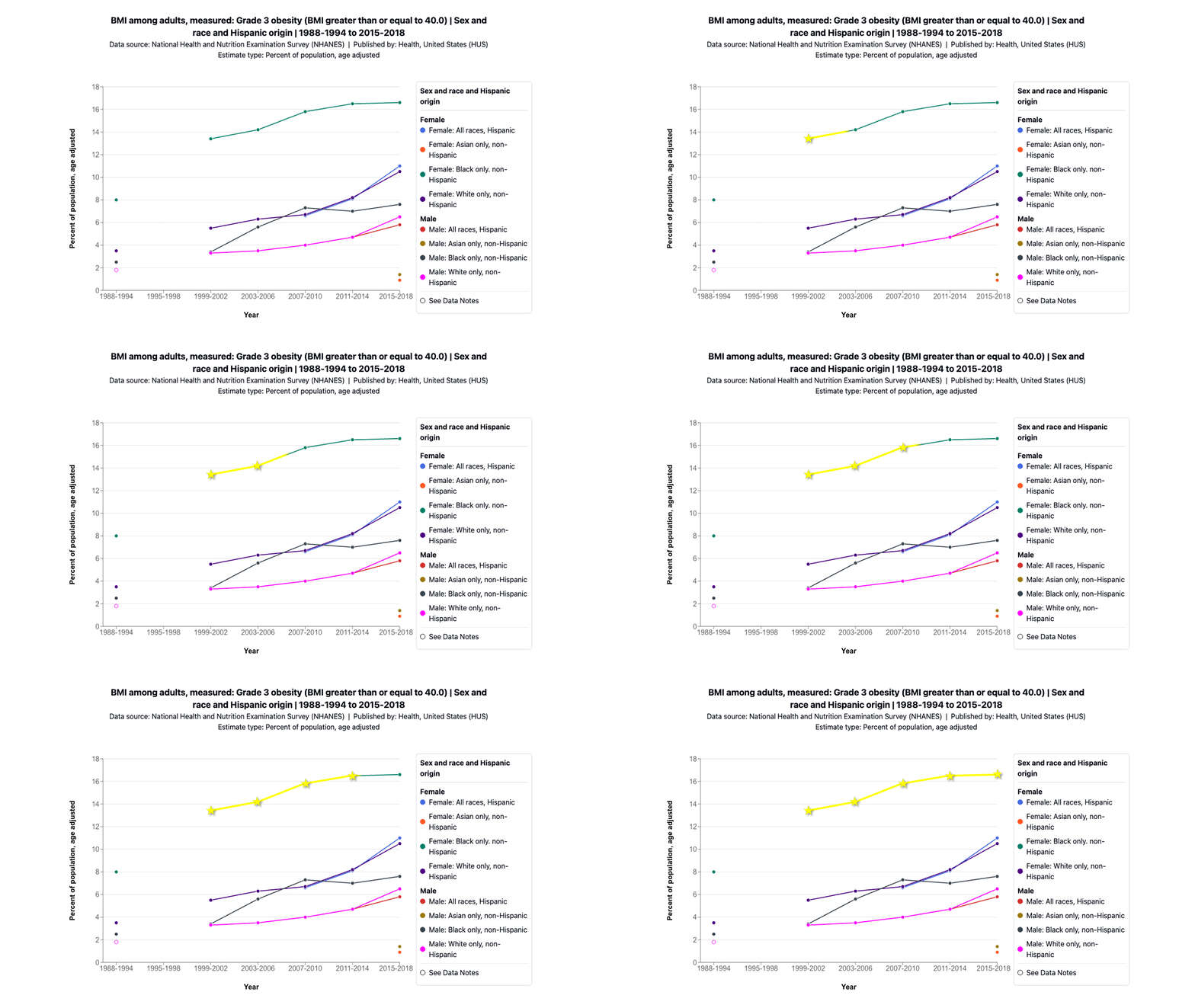
#1
There are few high-quality studies that directly address this group’s specific weight loss needs.
#2
African American women are consistently underrepresented in research.
#3
African American women are statistically more likely to drop out of a weight loss study than their White female counterparts.
Despite these alarming trends...
Unique Challenges Contribute to the Disproportionate Burden of Severe Obesity
Stress as a Central Driver
Chronic stress, shaped by social, cultural, and economic pressures, has direct behavioral and biological effects on weight gain. The figure below depicts the factors influencing the stress-obesity relationship based on previous models by Lazarus et al. (1984) and McEwen et al. (1993)

Role Overload
Chronic stress, shaped by social, cultural, and economic pressures, has direct behavioral and biological effects on weight gain.

The Superwoman Role
Cultural expectations to remain strong, suppress emotions, and avoid vulnerability can increase psychological distress while limiting willingness to seek support. “Racial discrimination has been linked to allostatic load (i.e., cumulative biological stress) among African American women. Coping is a central component of the stress response process. However, limited attention has been given to the role of coping in studies examining racial discrimination as a social determinant of health. We examined whether superwoman schema (SWS), a multidimensional culture-specific form of coping, modifies the association between racial discrimination and allostatic load.”

Coping Strategies Linked to Weight Gain
Stress is commonly managed through low physical activity, binge or night eating, and reliance on calorie-dense “comfort” foods. The figure below depicts Mediators of the relationship between “Trauma Exposure/Distress” and “Binge Eating” among African American women based on the findings presented in Harrington et al. (2010)


Additional Contributors
Cultural food traditions, barriers tied to hair maintenance and exercise perceptions, body image norms, physical limitations, and genetics all intersect with stress to worsen outcomes.

Despite the wealth of knowledge gained through many years of research significant gaps in knowledge remain...

Tailored Interventions
Few weight loss programs are designed specifically for African American women with severe obesity. Most existing studies are small, underfunded, or conducted outside the U.S., limiting generalizability.

Stress-Based Approaches
Although stress is well documented as a core barrier, only one known lifestyle intervention has placed stress management at its center. Evidence on how stress directly mediates obesity in this population is incomplete.

Social Support Mechanisms
The effectiveness of family and community support remains unclear, as mismatches between offered and desired support are common. Cultural resistance to seeking help further complicates interventions.

Eating Disorders
Prevalence and mechanisms of Binge Eating Disorder (BED) and Night Eating Syndrome (NES) in severely obese African American women are poorly understood, especially regarding whether these behaviors precede or follow weight gain.

Physical & Cultural Barriers
Limited data exist on addressing unique barriers such as pain-related mobility restrictions, hair maintenance costs, and divergent cultural perceptions of exercise and body image.

Long-Term Outcomes
Limited data exist on addressing unique barriers such as pain-related mobility restrictions, hair maintenance costs, and divergent cultural perceptions of exercise and body image.
Severe obesity in African American women represents an urgent and under-researched public health issue. While stress and culturally specific factors clearly drive the problem, most interventions fail to address these realities. Closing the knowledge gaps—especially around stress, coping, social support, and tailored program design—is essential for developing effective, sustainable weight loss strategies for this high-risk population.
